Anthropic is valued near $1 trillion; Zhipu, China's first listed large-model company, has rocketed ~2,400% this year to roughly $116 billion — and the gap is still ~8x. The frontier-capability gap is a sliver. That mismatch, already closing violently, is the trade.


For the last two years the AI trade has been a supply-chain trade. Everyone hunted upstream first — Nvidia — then, as the bottleneck moved, down to the memory makers (Samsung, SK Hynix, Micron), and now further still to optical interconnects and co-packaged optics. Each leg printed money. But I think the crowd is staring at the wrong layer. The most interesting thing happening in AI right now isn't a component shortage. It's the white-hot competition at the frontier-model layer — and the violent re-rating that competition is about to force on how these labs are valued.
Let me lay out the mismatch, because once you see it you can't unsee it.
Take Opus as a stand-in for the US frontier and call its capability 100. A year ago the best open-weight model out of China was maybe a 50. Today — between DeepSeek, Qwen, GLM (Zhipu), and Kimi — it's a 85 and climbing. Those numbers are illustrative, not benchmark scores, but anyone who has actually run these models in production knows the direction and roughly the magnitude.
Now layer cost on top. If Opus costs 100 to run, the marginal cost of a Chinese open-weight model you host yourself is close to 0 (you already own the GPUs), and buying it through a hosted API runs maybe 15. So you have a challenger at 85% of the capability for a small fraction of the cost — and the market caps say the opposite.
Here are the real numbers as of mid-2026:
| Lab | What it is | Valuation / market cap | Distribution |
|---|---|---|---|
| Anthropic | US frontier, closed weights | ~$965B (Series H, Apr 2026; nearing $1T) | Paid API + apps |
| Zhipu (GLM) | Chinese frontier, open weights | ~$116B (HKEX 2513, ~HK$940B; +~2,400% YTD) | Open weights + cheap API |
| MiniMax | Chinese multimodal | listed on HKEX (~$13.7B at debut, since re-rated sharply with peers) | Open weights + cheap API |
| DeepSeek | Chinese frontier, open weights | private; raised ~$7.4B (¥50B, first external round) | Open weights + cheap API |
The gap is still wide — roughly 8x between Anthropic and Zhipu — but notice the direction: Zhipu has run ~2,400% this year, which is the convergence I'm describing already playing out in real time on a live tape. The re-rating isn't a forecast; it's underway.
A capability gap of ~15% does not justify a valuation gap of ~8x. Either the Chinese labs are still underpriced, or Anthropic is richly priced, or — most likely — both, and the spread keeps compressing. Zhipu's parabolic run this year is the market beginning to make exactly that adjustment; the open question is how much of the remaining 8x belongs to genuine moat (US frontier lead, distribution, enterprise trust) versus inertia that hasn't repriced yet.
Here's the irony. Every time Washington worries about China catching up, it tightens the screws — no advanced lithography, no top-tier Nvidia silicon. The intent is to choke compute. The effect has been the opposite on two fronts.
Chips still get there. Two years of reporting has documented restricted GPUs reaching China through third countries, gray-market resale, and Chinese firms standing up compute offshore and reaching it over plain SSH for training and inference. Export controls raise the cost and the friction; they don't build a wall. Worse, being told "you can't have this" is the single most reliable way to make a determined, well-funded engineering culture build it themselves — which is exactly what a domestic accelerator industry is now doing.
And the real moat is electricity. This is the part the chip headlines miss. China generates more than twice the electricity the US does, and the gap is widening fast: in 2024 alone China added roughly 543 GW of new capacity — more than the entire installed base the US has ever built — against about 51 GW for the US. Morgan Stanley has flagged a potential ~44 GW shortfall for US data centers within three years, while China is projected to sit on ~400 GW of spare capacity by 2030. The US grid is bottlenecked on transformers and interconnection queues; hyperscalers are resorting to burning on-site gas and fighting permitting battles. China's grid just keeps expanding, and cheap, abundant power is exactly what lets Chinese providers floor their API prices. The popular framing is "the US has the brains (chips), China has the muscle (power)" — but muscle is catching up to brains faster than brains can find muscle.
 Brains vs. muscle: the US leads on silicon, China on electrons — and the binding constraint of the next phase is power, not just chips.
Talent is the second engine, and US policy is — again — quietly handing China an edge.
The mechanism isn't about who is innately more capable. It's about options and asymmetric downside. A foreign PhD on a student visa in the US faces a binary outcome: out-compete everyone in the lab, or get sent home to a lower-paying market. I have friends finishing PhDs in the US on $2,000–$3,000 a month — barely covering rent and food — betting five-plus years on either the love of the work or a $300k post-graduation salary. The thing that keeps them grinding is that the floor beneath them is removal from the country. A domestic graduate, by contrast, has citizenship and a dozen comfortable fallbacks — a high tolerance for error, plenty of good-enough jobs that don't require a PhD, and no existential reason to break themselves over a research problem. When life gives you that many options, you simply don't need to grind as hard. Scarcity of options manufactures intensity — and US policy is busy concentrating that scarcity, and therefore that intensity, in exactly the people it's pushing out.
The H-1B changes accelerate the exodus. The Trump administration replaced the random H-1B lottery with a weighted, wage-based selection (final rule effective Feb 27, 2026): the higher the DOL wage level an employer offers, the more entries you get — Level IV gets four, Level I gets one. New grads offered average or entry-level wages now have the worst odds of selection. Stack on a proposed prevailing-wage hike (an entry-level San Francisco engineer would need ~$162k, ~30% higher) and a $100,000 per-visa fee, and the message to a freshly minted AI researcher is unambiguous: your path to staying just got narrower.

The same administration pitching a $5M "gold card" for the wealthy is pricing ordinary new-grad researchers out of the H-1B — concentrating, not retaining, the talent the AI race runs on.
Where does that talent go? Chinese labs just raised enormous war chests and can match US compensation while their people live at a fraction of the cost — a researcher working in Hong Kong can rent in Shenzhen and commute. With the friction running the other way, top-tier AI talent flows toward China at the margin, not away from it.
China's labs have mostly chosen to open-weight their models, and that is a quietly devastating move — what Chinese strategists would call a yang mou, a strategy that works precisely because it's out in the open and there's no counter.
Because the weights are open, the US can't ban them. Anyone can buy a handful of GPUs, stand up a cluster, and run a Chinese open-weight model locally — with zero risk of their sensitive data ever touching a Chinese server. It's all upside for the adopter. We're already watching US companies switch their workloads to Chinese open models for exactly this reason.
The pincer's other jaw is price. Suppose a small company wants to self-host a full-parameter open model — that's hundreds of thousands to millions of dollars in hardware. China's electricity-fueled API pricing makes that math look foolish: why buy the cluster when the token is nearly free? But going through the API means your prompts and conversations are visible to the provider (and, by extension, potentially to the Chinese state). So adopters face a genuine fork:
| Path | Cost | Data control |
|---|---|---|
| Self-host open weights | High capex (own GPUs) | Full — nothing leaves your network |
| Chinese hosted API | Near-floor per token | None — prompts visible to the provider |
| US closed API (Anthropic/OpenAI) | Premium per token | Contractual, US-jurisdiction |
That trilemma — cheap, capable, private: pick two — is the actual competitive battleground of the next phase, and it's one Anthropic's premium-priced, closed model only wins on the privacy/jurisdiction axis.
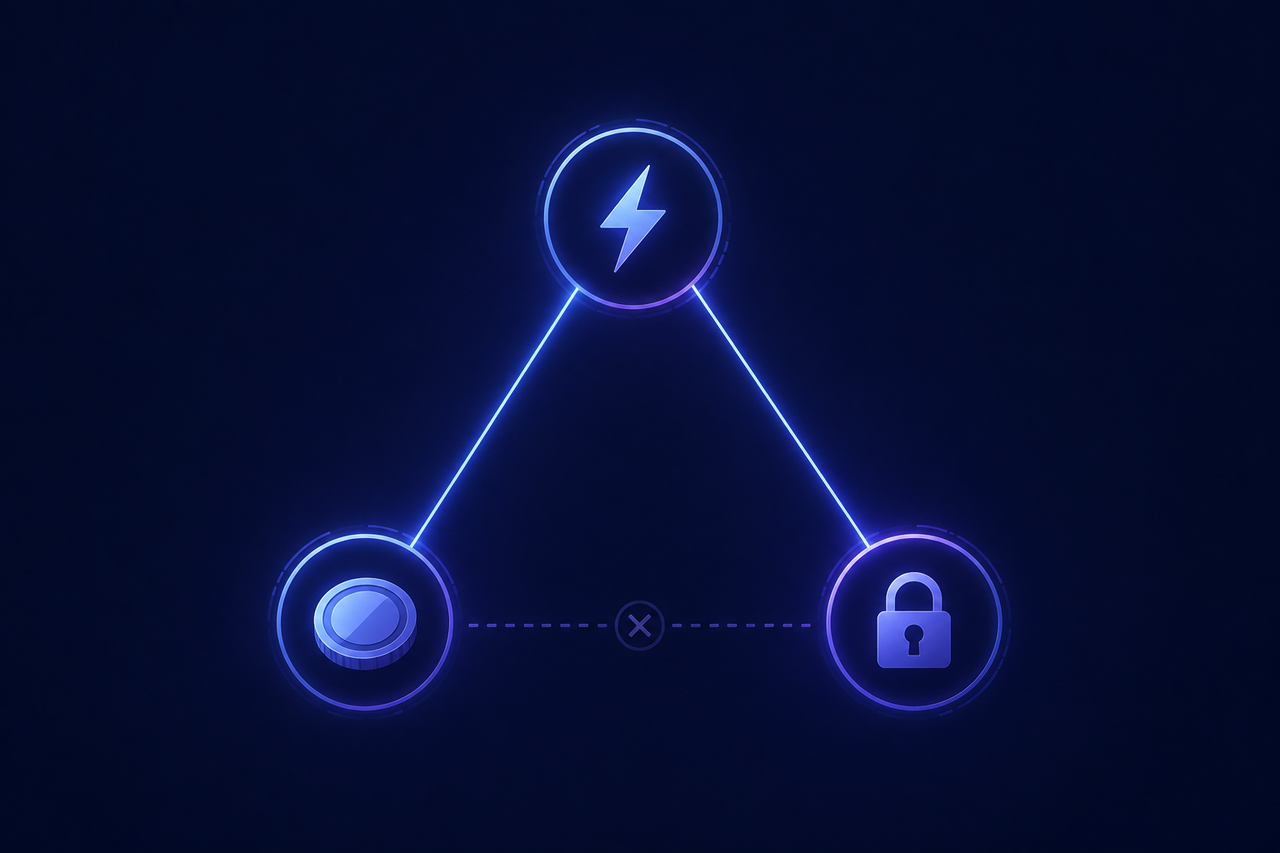 The adopter's trilemma: capable (lightning), cheap (coin), private (lock) — any two connect, but the cheap-and-private edge is the one that breaks.
The standard rebuttal: the US will reach AGI first, so Chinese labs are permanently behind. AGI may well arrive in the US first — but a breakthrough that large doesn't stay secret. Chinese labs (DeepSeek is openly hiring toward an AGI push) will race to replicate it, and the most likely end-state looks less like one company owning a god-machine and more like a decentralized, multi-polar capability — closer in spirit to how blockchains diffused than to a single proprietary moat.
A tell worth watching: DeepSeek is hiring aggressively into legal and compliance. A frontier lab that suddenly needs lawyers and regulatory staff isn't lawyering for fun — that's the unglamorous pre-IPO checklist, the regulatory and disclosure groundwork you do before you file. My strong read is that DeepSeek is preparing to list, and I'd bet on a 2026 listing rather than later. If that's right, the pool of publicly-tradable Chinese frontier pure-plays is about to widen again.
Honestly, I think that's the healthier outcome. Competition is good. Every model encodes its makers' constraints: Chinese models carry political guardrails and will sidestep sensitive questions about the Party; US models aren't neutral either — xAI's Grok has drawn repeated, well-documented controversy over biased outputs and loosened guardrails that left it lagging on core coding and reasoning. The lesson isn't that one side is clean. It's that a plurality of frontier models is safer than betting civilization on a single vendor's value function.
I want to be blunt that this section is a set of theses, not recommendations — read the disclaimer. But here's how I'd frame the opportunity set the second-phase thesis implies.
1. Trade the convergence. If the valuation spread between US and Chinese labs is the mispricing, the cleanest expression is long the listed Chinese pure-plays, short the US frontier. Zhipu and MiniMax already trade on HKEX (and Zhipu's ~2,400% run shows how violently this leg can move), while synthetic exposure to private names like Anthropic and OpenAI shows up on perp DEXs (Hyperliquid, Lighter, and similar). The catch on the short leg is timing: Anthropic's IPO now looks pushed to 2027 (reporting cites SpaceX's cooled debut and soft market conditions — though the timeline is contested), so a clean public-market short is a year-plus away, and pre-IPO synthetic shorts carry funding-rate drag while you wait. "The gap should close" can also stay wrong far longer than your margin lasts — and after a 2,400% run, the long leg is no longer cheap. Treat it as a small, balanced basket, not a single high-conviction bet. DeepSeek is the likely fourth leg — I expect it to list in 2026, which would give the basket another liquid Chinese pure-play.
2. Own the picks-and-shovels of US compute, not the supply chain. If Chinese open weights keep winning share, the US response is predictable: a wave of domestic firms renting compute, building GPU clusters, and serving Chinese open models on US soil so all data stays in-jurisdiction. That points at power generators, the commodities and equipment that feed data-center construction, data-center financiers, and compute-leasing names. The core logic is simple: US data centers only multiply from here, and the binding constraint is electrons.
3. Stop digging the supply chain. This is the one I feel most strongly about. The component trade is a wave, and by the time it propagates to the next downstream link the amplitude has decayed and the easy returns are gone. The fresh edge is at the frontier-model and power layers, not the third derivative of an interconnect.
 The supply-chain trade is a wave: loud at the source (Nvidia), quieter at each downstream link. By the time it reaches the third derivative of an interconnect, there's little amplitude — or return — left.
If you remember one thing: the next phase of AI competition is a contest over who reaches AGI first, whose grid can actually power the build-out, and how fast Chinese open models close the last 15 points — and the cleanest mispricing sitting in plain sight is an ~8x valuation gap between two sets of labs separated by a sliver of capability, a gap the market has already begun closing in real time.
For more on how incentive-chasing capital behaves once a trade gets crowded, see how to become mercenary capital; for how pre-launch valuations get set in this market, see our guide to point farming.
This article is analysis and opinion, not financial advice. Pre-IPO and perp-DEX exposure to private companies is illiquid, leveraged, and can move violently against a thesis that is directionally correct but early. Do your own research and never risk capital you can't afford to lose.
As of mid-2026, Anthropic is valued near $965B (Series H, nearing $1T) while Zhipu, China's first listed large-model company, has surged ~2,400% YTD to roughly $116B on HKEX — leaving a gap of about 8x. The best Chinese open-weight models (DeepSeek, Qwen, GLM, Kimi) have closed most of the capability gap, and Zhipu's run shows the market already repricing it. A sliver of capability difference can't justify an 8x gap, so the spread should keep compressing.
Two reasons. First, most Chinese labs open-weight their models, so the marginal cost of self-hosting is near zero once you own the GPUs. Second, electricity is China's real moat: it generates more than twice the power the US does and added ~543 GW of capacity in 2024 alone, versus ~51 GW for the US. Abundant, cheap power lets Chinese providers floor their hosted-API pricing.
Not much, by most accounts. Reporting has documented restricted GPUs reaching China through third countries and gray-market resale, plus Chinese firms running compute offshore and accessing it remotely. Controls raise cost and friction but don't build a wall — and being cut off has spurred a determined domestic accelerator industry. The bigger US constraint is power: the grid is bottlenecked on transformers and interconnection, while China's keeps expanding.
Because the model weights are openly published, anyone can download and run a Chinese model locally — the US has nothing to ban. That's one jaw. The other is price: Chinese hosted APIs are so cheap that self-hosting often looks uneconomical. The catch is data: a hosted API exposes your prompts to the provider. Adopters face a trilemma — cheap, capable, private — and can realistically pick only two.
Probably not permanently. A breakthrough that large is hard to keep secret, and Chinese labs (DeepSeek is openly hiring toward an AGI push) would race to replicate it. The likely end-state looks more like a decentralized, multi-polar capability — closer to how blockchains diffused than to one company owning a proprietary moat. A plurality of frontier models is arguably a safer outcome than a single-vendor monopoly.
This is analysis, not advice. The thesis-level expressions are: trade the convergence (long listed Chinese pure-plays like Zhipu and MiniMax, short US frontier exposure — though Anthropic's IPO now looks pushed to 2027, so a clean public short is far off and synthetic pre-IPO shorts carry funding-rate drag); own US compute picks-and-shovels (power generators, data-center suppliers and financiers, compute leasing); and stop chasing the decayed supply-chain wave. DeepSeek may add a liquid fourth leg if it lists, which I expect in 2026. Size small and do your own research.

Practitioner turned analyst tracking how incentives, liquidity, and capital flows shape DeFi protocols.


