Tens of thousands of protocols launch on DefiLlama; the overwhelming majority won't survive four years. Here's how to tell the survivors from the rug pulls — and how to capture the upside while a protocol is still early, when the risk is paradoxically at its lowest.


There are tens of thousands of DeFi projects on DefiLlama. The overwhelming majority will not survive four years. This article is about the other kind — how to recognize a protocol worth backing, and how to capture the upside while it's still early, when the risk is paradoxically at its lowest.
Before you can judge a protocol, you have to understand what it costs to run one.
Every early-stage DeFi project needs, at a bare minimum, three to five full-time engineers under contract. These are programmers first, supported by a thinner layer of operations, marketing, and BD — with community moderation usually outsourced. But the core is the code. Even in the age of AI coding agents like Claude Code, an early protocol still requires an enormous amount of original development: frontend, backend, databases, on-chain contracts, indexers, and more. One strong engineer paired with an AI agent might do the work of three — which is exactly why, in 2026, almost nobody hires junior developers anymore. Back in 2017, knowing a little Solidity could land you a six-figure, work-from-home job. Today, after a wave of protocol deaths and with AI multiplying every senior engineer's output, that entry-level tier has largely evaporated.
Here's the point of all that detail: do the math. A senior engineer costs at least $100,000 a year. Five people is half a million dollars a year in fixed salary — before servers, audits, legal, or marketing. And it doesn't stop at launch: a live protocol has to keep shipping updates, maintaining what exists, and building what's next.
 A handful of engineers, half a million dollars a year, and a runway that's always burning. Understanding this math is the first step to judging any protocol.
Where does that money come from? For most early projects, it comes from VCs — which means handing a large slice of the future token supply to investors. A protocol can also earn revenue itself, but the uncomfortable truth is that many DeFi projects barely make money, or make it only in a bull market. So when the bear arrives, the token allocation is spent, revenue collapses, and suddenly the team can't make payroll. That is the exact moment a project with no conscience disappears — a rug, or a quieter "soft rug."
This is why the first thing you evaluate in any protocol is the same thing you'd evaluate in a business: can it actually pay for itself?
There's a healthier version of this story, and it's worth holding up as the model.
Take APYX. Many of its founders are crypto veterans — old hands who don't need VC money. It was structured more like a partnership than a venture-funded startup, with the founders putting their own capital and reputation behind it. The results came fast: APYX reached $500M in TVL in short order, then launched its token and turned on the fee switch from day one. Charging real revenue from the start, rather than subsidizing growth indefinitely and hoping to monetize "later," is a healthy mechanism — and a strong early signal.
Most people assume a brand-new protocol is the most dangerous thing they can touch. The opposite is usually true.
If you rank DeFi protocols by risk, the safest are the blue chips — Uniswap and its peers, battle-tested over many years. Right behind them, perhaps counterintuitively, sit the brand-new protocols: the ones less than a year, even less than six months, old. The most dangerous are the projects that have already issued their token and drifted into a plateau — past the hype, past the incentives, with nothing left to look forward to.
The reason is incentives. A protocol that hasn't issued its token yet — but is expected to — is a protocol whose team cannot afford to let anything go wrong.
Think of a company a year away from its IPO. The founders will do everything they can to stay compliant, work hard, keep their heads down, and avoid saying anything controversial in public. Why? Because if they can just survive that year and reach the listing, everyone walks away wealthy. That expectation is a leash. As long as it exists, the team has no rational reason to act with malice.
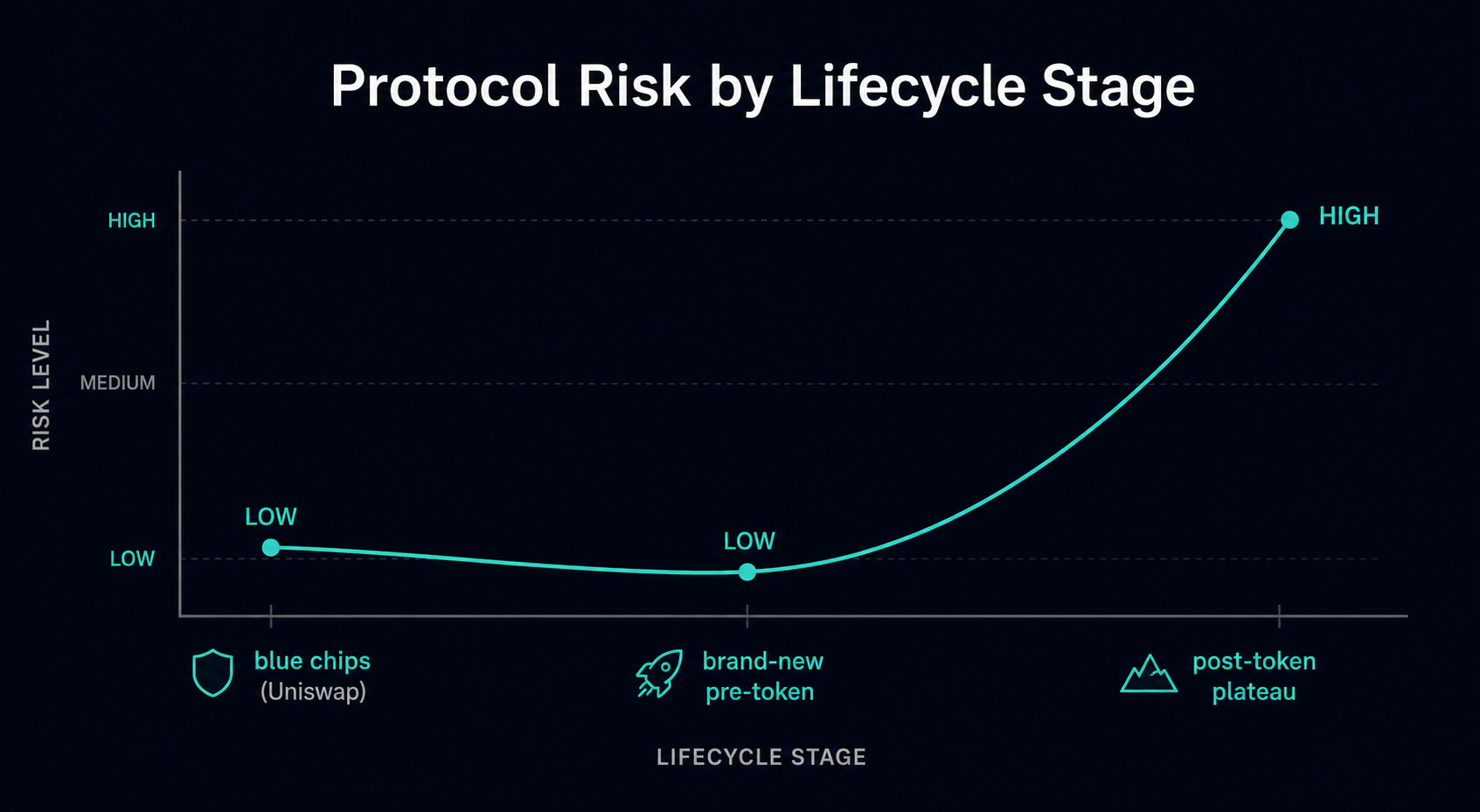 Risk across the lifecycle: lowest for battle-tested blue chips and pre-token newcomers, highest for projects that have already launched their token and stalled out.
A pre-token DeFi team operates under the same leash. The token launch is their IPO. Everything they've worked for converts to liquidity at that event — so until it happens, their interests and yours are aligned. This is the window where early users earn the most, at the very moment the team is most motivated to behave.
The leash works only while the token launch is genuinely expected. Two things break that assumption — and both are common.
The team that never pulls the trigger. Some projects dangle the token forever. Neutral is an example: it ran a basis-trade strategy, buying VCs' locked tokens at a discount and slowly realizing the spread. But its TVL hit a ceiling — and then started to slide. So the token launch just... never comes. The team drags on, and nobody knows what the endgame is. A token expectation that's perpetually deferred is no expectation at all; the leash goes slack.
The crisis you can't see coming. A protocol can look rock-solid right up until something external snaps. APYX — the same healthy example from earlier — is also a cautionary one: absent the STRC depeg, it likely would have kept humming along. But when STRC came unpegged, APYX's own apxUSD followed it down, from $1 to roughly $0.90. The lesson cuts both ways: without an external shock, you never actually find out how a team behaves in a crisis — which means a calm track record in calm times tells you very little.
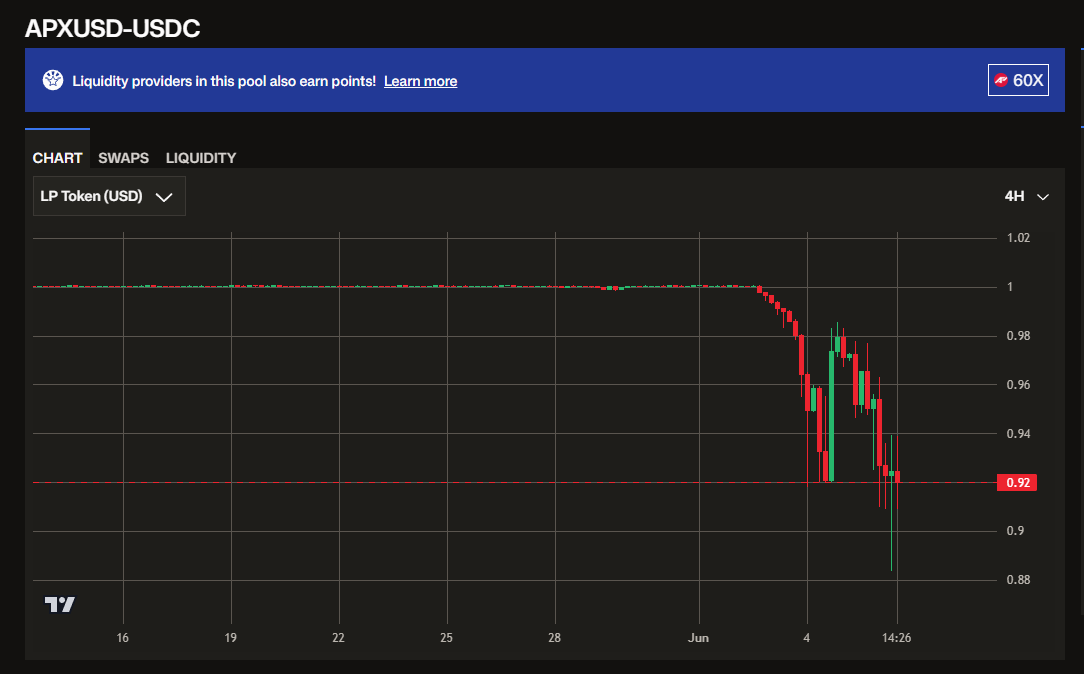 When STRC came unpegged, APYX's apxUSD followed — sliding from $1 to about $0.90. A crisis is the only time you learn how a team really operates.
So "early" lowers your risk; it does not eliminate it. You still have to read the team. The rest of this article is about how.
Early projects love points. Hold a stablecoin, earn 1 point a day; provide DEX liquidity, earn 2; buy YT, earn 10. The promise is that these points will one day convert into tokens. The catch is that they might not — and even if they do, the conversion rate is whatever the team decides.
Here's the part most users miss: points are just a row in the team's database. The blockchain is immutable; a database is not. Whoever controls the backend can edit it.
That's also why points are auditable — if you know where to look. Skilled analysts can reconstruct what the points should be from on-chain activity and compare that against what the team publishes. It isn't perfect, but it works well enough to catch manipulation. Take Saturn, which publishes a public points board. Watch it long enough and you'll notice the totals don't accrue smoothly — yesterday it was 300B, today it's 500B, then it creeps up slowly, then jumps again. Now remember: points should accumulate faster only when TVL grows. If TVL barely moved but points spiked, something doesn't add up.
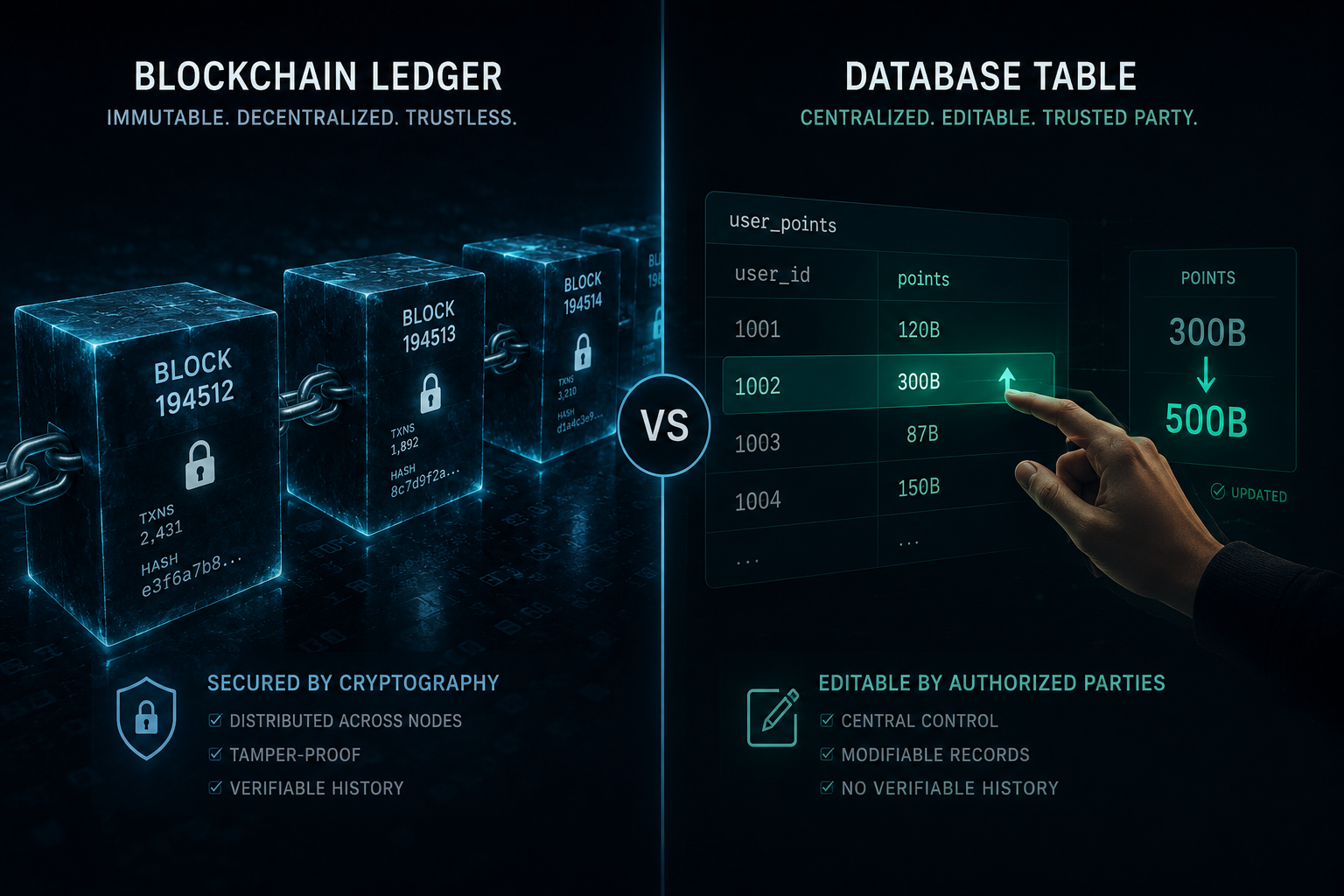 The chain is immutable; the points database is not. When a public points board jumps without a matching jump in TVL — as Saturn's sometimes has — that gap is the tell.
This is why transparency is the real signal. A team that wants to cheat — inflating points out of thin air, quietly minting 1–2% to insiders — is diluting everyone else's share. Those insider points are a hidden tax on honest users.
Now contrast that with USDai. It discloses every bit of points accrual, and even exposes a public API so anyone can verify the numbers themselves. Think about what that means: a team that intended to cheat would never go to the trouble of auditing its own points and shipping an API to prove them. And none of this is technically hard — a public points endpoint is a day's work for a senior engineer, a backend route and a frontend table. The data is trivial to expose. So when a team won't expose it, the question isn't whether they can. It's why they won't.
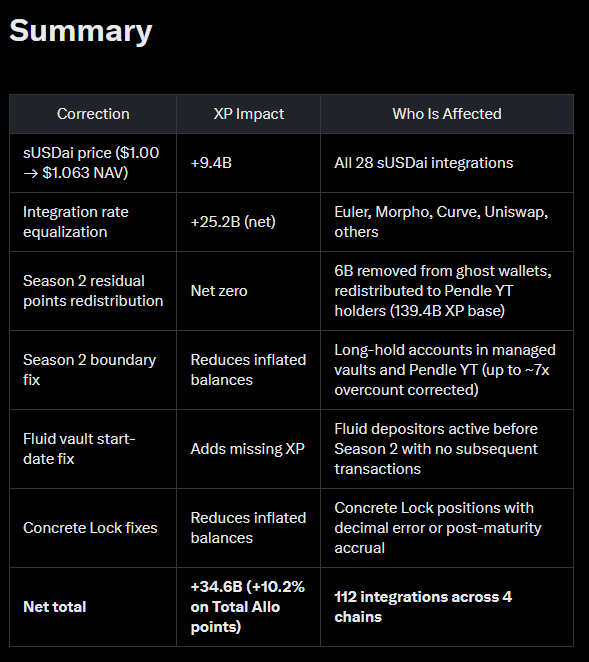 USDai publicly itemizes every points correction — what changed, the exact XP impact, and who's affected, right down to ghost-wallet redistributions. A team with something to hide doesn't publish a ledger this granular (and USDai even exposes an API to verify it).
Every project has a Discord or Telegram. Most of the people in it are moderators earning $1–2k a month, often juggling several projects' servers at once. That part doesn't matter much.
What matters is whether the founders, co-founders, and engineers are also in the room — and whether they actually answer questions. The best I've seen is Pendle. They respond to everything, especially from new users trying to understand the mechanics; there's always an admin or a veteran ready to explain. That culture is not an accident, and it is not cheap to fake.
The single biggest red flag is the opposite: arrogance. If a team's posture toward its users carries even a whiff of arrogance, run.
Arrogance is the most dangerous trait a team can have, because it metastasizes. It starts as contempt for users — dismissing their questions, ignoring their feedback, kicking anyone whose questions touch a nerve or a core interest. But it never stays there:
Arrogance is the cardinal sin of crypto. Almost every other failure mode is downstream of it.
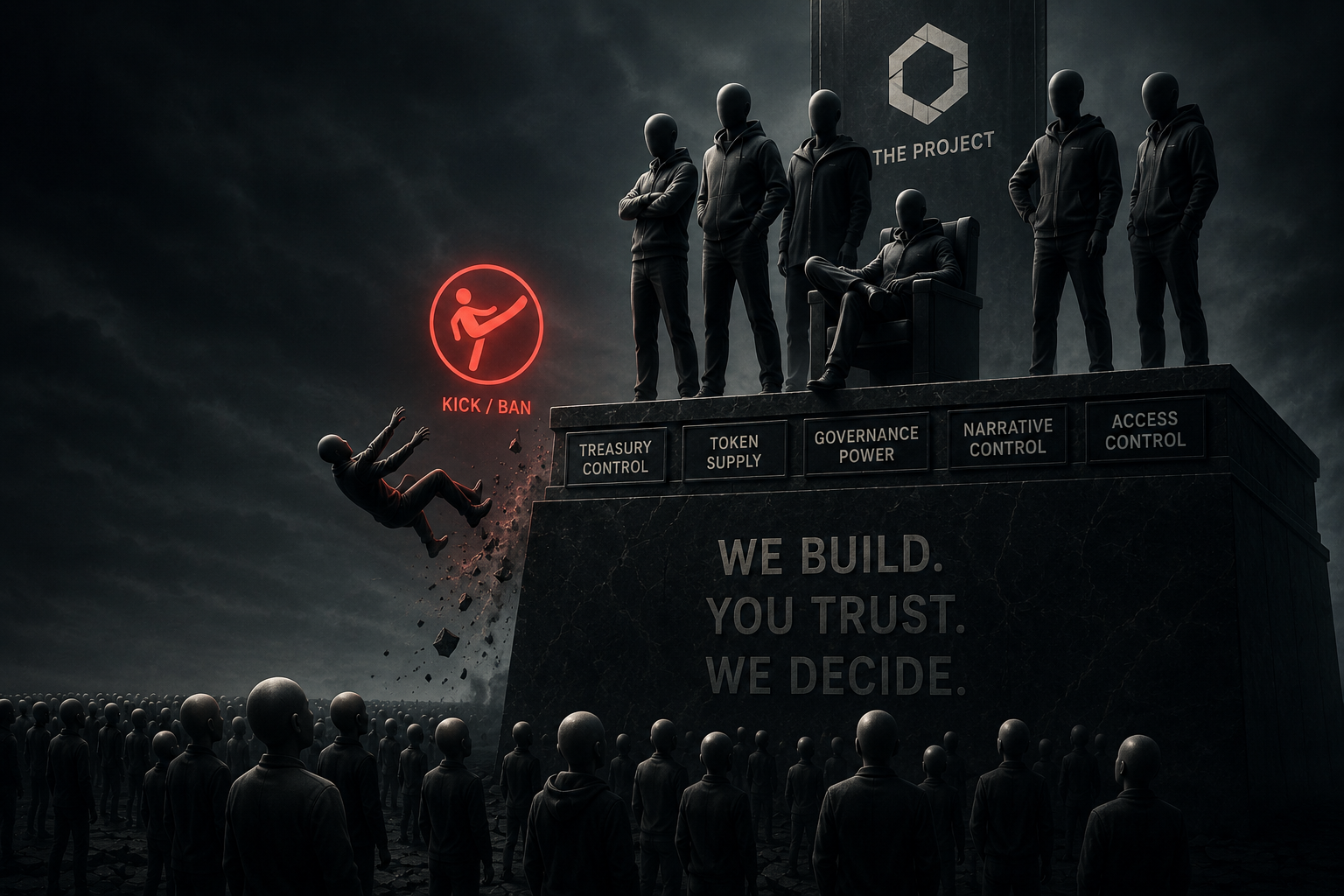 The single loudest red flag: a team that belittles its users, ignores feedback, and kicks anyone who asks an inconvenient question. Arrogance toward users becomes arrogance toward code, market, and investors.
A lot of what goes wrong is simply the market and the macro environment. You can't blame a team for a bear market. What you can judge is how they respond to one — because that response, more than anything in calm times, determines whether a project lasts.
USDai's TGE in the spring of 2026 is the case study. Demand for the project was obvious: Season 1's underlying APY was only 4–5%, yet PTs on Pendle were trading at a 10–15% implied yield — the premium was pure hype. But the macro backdrop was ugly. Bitcoin was listless, and the team had already committed to a March TGE at a $300M initial valuation — a number almost nobody believed the market could support. The consensus was that anyone buying the ICO at $300M was simply providing exit liquidity for airdrop farmers. The team had planned to sell 10%; in the end the raise only filled 5.6%.
And then it launched on every major exchange on day one — even Robinhood. The market cap ran to $1.4B. Anyone who had taken the ICO was sitting on at least a 3x. Plenty of people who had skipped the ICO to farm YT instead watched their positions expire worthless.
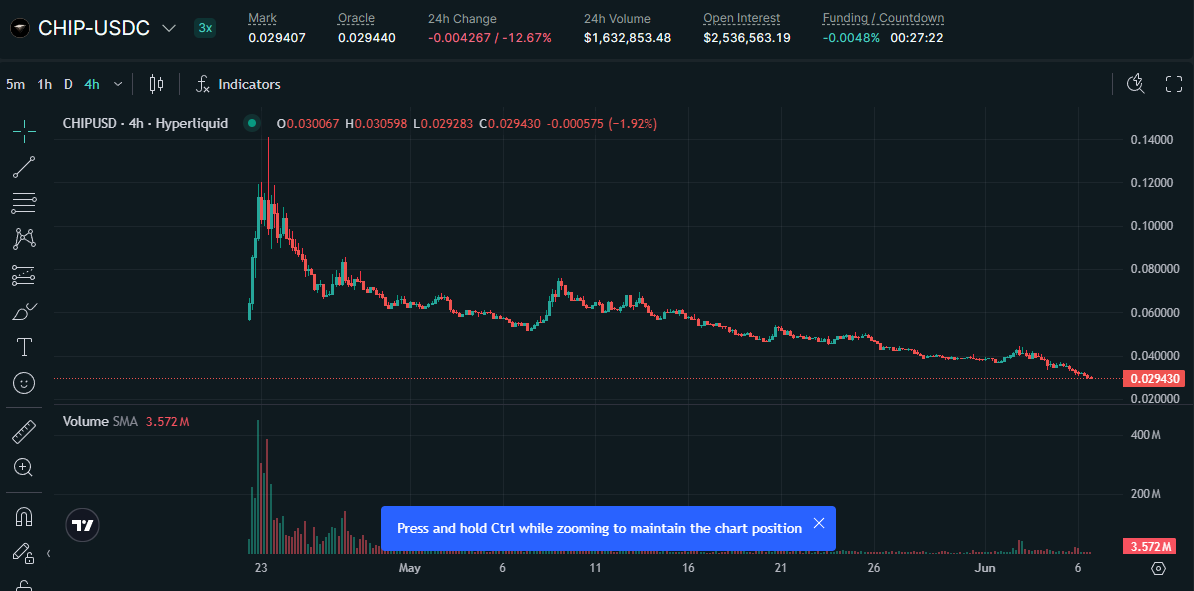 USDai's token spiked at launch — a run to a ~$1.4B cap, at least 3x for anyone who took the ICO — then bled steadily lower.
(The token itself has drifted lower since, and that's rational: it carries no governance rights and no claim on revenue — all it does is earn Season 2 points. When a token isn't actually wired to the value of the protocol behind it, a slow bleed is the honest price.)
Here's the part that stuck with me. Through all of it — a brutal tape, a raise that underfilled, a wall of furious holders — the USDai team kept showing up in Telegram, answering calmly, neither groveling nor getting defensive. That composure under fire is worth more than any pitch deck.
Picking a good protocol is, in the end, no different from picking a good company.
What good looks like:
What bad looks like — the mirror image:
Backing a protocol early can pay off enormously, but the risk is just as real. I've laid out everything I've learned here without holding anything back — I hope it helps you choose better.
Economics. An early protocol needs three to five full-time senior engineers — at least half a million dollars a year in salary before servers, audits, legal, or marketing — and the burn never stops after launch. Most DeFi projects barely earn revenue, or earn it only in bull markets. When the bear arrives, the token allocation is spent, revenue collapses, and teams that can't make payroll rug or quietly soft-rug. The first question to ask of any protocol is the same as for any business: can it pay for itself?
The risk curve is inverted. Safest are battle-tested blue chips like Uniswap; right behind them, counterintuitively, sit brand-new pre-token protocols less than a year old. The most dangerous are projects that already launched their token and drifted into a plateau. A pre-token team is on a leash: the token launch is their IPO, so until it happens their interests align with yours. Post-token, with nothing left to look forward to, that leash goes slack.
Points are a row in the team's database, not entries on an immutable blockchain — whoever controls the backend can edit them, mint hidden allocations to insiders, or change the conversion rules. The tell is a public points board that jumps without a matching jump in TVL. The counter-signal is proactive transparency: a team like USDai that publishes every points correction and exposes a public verification API is doing work no team intending to cheat would bother with.
Four things, read like a financial statement: (1) revenue versus expenses — breaking even is good, revenue that dwarfs costs with dividends or buybacks is excellent and rare; (2) founders who show up in the community and handle hostile questions well; (3) fundamentals that survive without a bull market; and (4) deep, verifiable transparency — public disclosure and responsiveness when it actually matters. Charging real revenue from day one, as APYX did with its fee switch, is a strong early signal.
The mirror image of the green flags: a protocol that loses money or barely earns any (a candidate for a rug or a slow soft-rug); an arrogant founder or one with a fraud history; a fundamentally unsustainable model — Ponzi-like structures are visible to anyone clear-eyed; and an opaque, evasive team with hidden insider allocations that turns hostile toward users asking pointed questions. A perpetually deferred token launch is its own red flag: an expectation that never lands stops disciplining the team.
No — early lowers risk only while the token launch is genuinely expected. Two things break that: teams that dangle the token forever, and crises you can't see coming. A protocol can look rock-solid until an external shock — APYX ran healthily until the STRC depeg dragged its apxUSD from $1 to roughly $0.90. A calm track record in calm times tells you little; a crisis is the only real audit of how a team behaves.

Practitioner turned analyst tracking how incentives, liquidity, and capital flows shape DeFi protocols.


